Skip to content
Skip to product information
Description

ZWO ASI585MC Pro Review – A Versatile Cooled Camera for Planetary and Deep-Sky Astrophotography

The ZWO ASI585MC Pro is one of the most versatile cooled astronomy cameras in the ZWO range. Built around Sony's outstanding STARVIS 2 IMX585 CMOS sensor, it bridges the gap between dedicated planetary cameras and entry-level deep-sky imaging cameras, making it an excellent choice for astronomers who want one camera capable of tackling almost every type of astrophotography.

Unlike many astronomy cameras that are designed for one specific purpose, the ASI585MC Pro feels equally at home capturing high-speed videos of Jupiter and Saturn, detailed lunar mosaics, solar imaging, Electronically Assisted Astronomy (EAA), and surprisingly capable long-exposure deep-sky photographs. Its combination of a back-illuminated sensor, extremely low read noise, high frame rates and efficient two-stage cooling gives it impressive flexibility whether you're imaging from your garden observatory or travelling to dark sky locations.

For many astrophotographers, versatility matters just as much as outright performance. Investing in a camera that can image planets one evening and galaxies the next offers excellent value, especially for those building their first dedicated imaging system. The ASI585MC Pro delivers exactly that, combining modern sensor technology with ZWO's proven hardware design and broad software compatibility.

Dark Clear Skies Expert Verdict

Overall Rating: 9.7 / 10

The ASI585MC Pro is one of the most capable all-round astronomy cameras currently available. It combines excellent planetary performance with genuine deep-sky capability, making it an outstanding choice for astronomers who don't want separate cameras for every imaging discipline.

Best suited for:

  • Planetary imaging
  • Lunar imaging
  • Solar imaging (with the appropriate filters)
  • Entry-level deep-sky astrophotography
  • Electronically Assisted Astronomy (EAA)
  • Portable imaging setups

Its excellent Sony IMX585 sensor, zero amp glow, impressive near-infrared sensitivity and efficient TEC cooling make it one of the best-value cooled colour cameras in the ZWO range.

Key Features

  • Sony STARVIS 2 IMX585 back-illuminated CMOS sensor
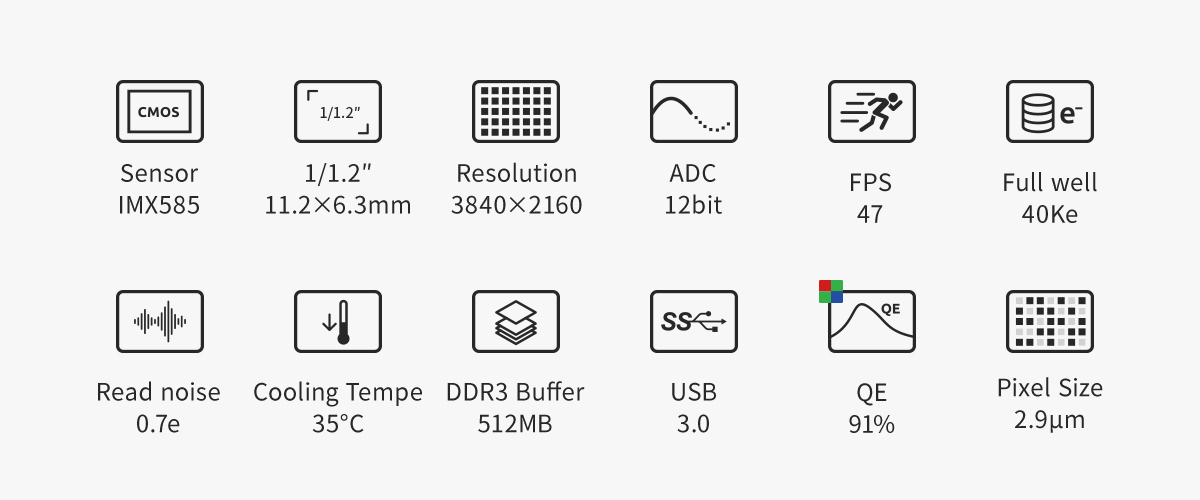
  • 3840 × 2160 (8.29 megapixel) resolution
  • 2.9μm pixel size
  • Large 1/1.2-inch optical format
  • Zero amp glow hardware design
  • Two-stage TEC cooling system
  • Up to 47fps at full resolution
  • 91% peak quantum efficiency
  • 512MB DDR3 image buffer
  • USB 3.0 connectivity
  • Integrated USB 2.0 hub
  • Outstanding near-infrared sensitivity
  • Compatible with Windows, macOS and Linux
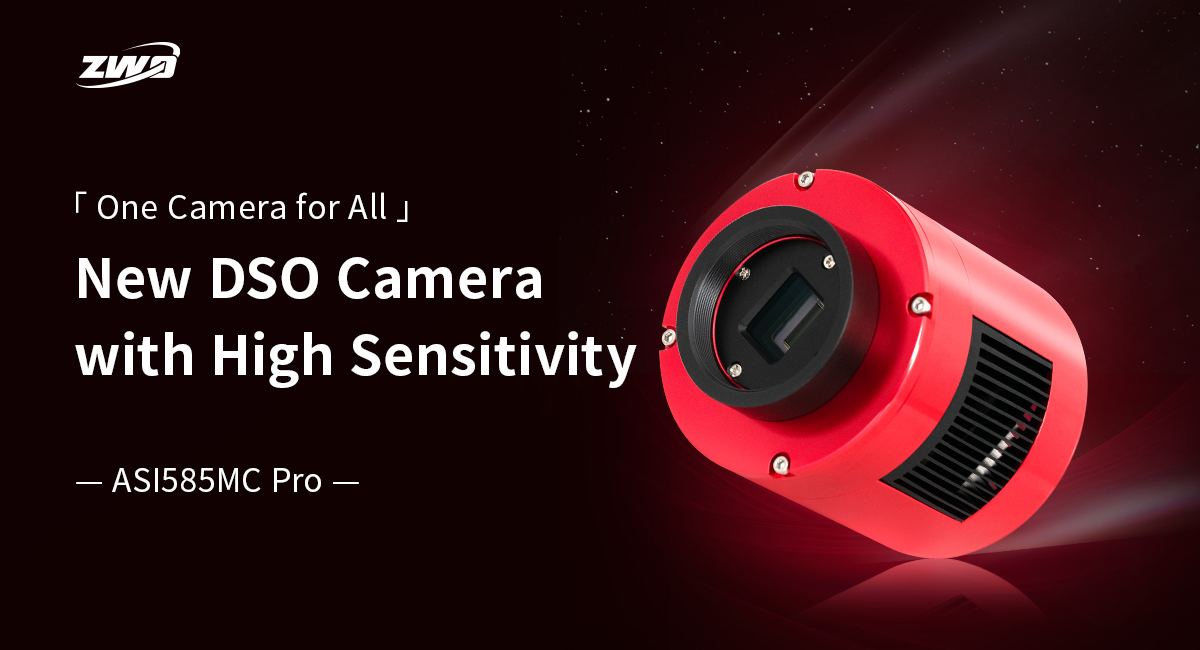
ZWO ASI585MC Pro Astronomy Camera

Why Choose the ASI585MC Pro?

The biggest strength of the ASI585MC Pro is its flexibility. Many cooled astronomy cameras are designed almost exclusively for long-exposure deep-sky imaging, while smaller planetary cameras sacrifice cooling in favour of frame rate. The ASI585MC Pro successfully combines both approaches into a single compact camera.

For planetary imaging, the camera's high-speed USB 3.0 interface and rapid frame rates allow thousands of individual frames to be captured in only a few minutes. These frames can then be stacked to overcome atmospheric turbulence and reveal remarkably fine detail on planets such as Jupiter, Saturn and Mars.

Switch to deep-sky imaging and the camera's two-stage TEC cooling dramatically reduces thermal noise during long exposures. Combined with Sony's STARVIS 2 technology, low read noise and excellent sensitivity, the ASI585MC Pro is capable of producing clean images of bright nebulae, galaxies and star clusters that far exceed what most DSLR cameras can achieve.

Perhaps the most impressive aspect of the IMX585 sensor is its excellent response in the near-infrared spectrum. This benefits planetary imaging by revealing additional detail when using infrared-pass filters and also improves performance under less-than-ideal seeing conditions.

Sony STARVIS 2 IMX585 Sensor

At the heart of the ASI585MC Pro is Sony's IMX585 STARVIS 2 back-illuminated CMOS sensor. This latest generation sensor represents a significant step forward over previous designs, offering improved sensitivity, a larger full well capacity and exceptionally low read noise. While the headline specifications are impressive, the real advantage becomes obvious once you begin imaging.

The back-illuminated architecture allows more incoming light to reach each pixel by moving the sensor electronics behind the light-sensitive surface. More captured photons translate directly into improved signal-to-noise ratio, cleaner images and better performance when imaging faint astronomical objects.

The camera features an 8.29 megapixel resolution (3840 × 2160 pixels) with compact 2.9μm pixels. This combination provides excellent image detail while maintaining fast download speeds and manageable file sizes. Whether you're capturing thousands of planetary frames or collecting several hours of deep-sky exposures, the ASI585MC Pro remains efficient and responsive.

The IMX585 is also notable for its excellent sensitivity in the near-infrared region. When used with infrared-pass filters, planetary imagers can often record sharper images during average seeing conditions because longer wavelengths are less affected by atmospheric turbulence. This has made the ASI585MC Pro particularly popular among serious planetary observers.
ZWO ASI585MC Pro Sony IMX585 Sensor

One Camera for Almost Every Target

Many astronomy cameras excel at one task but struggle with another. The ASI585MC Pro is different. Its combination of high frame rates, efficient cooling and excellent sensor performance means it can comfortably switch between planetary imaging, lunar imaging, solar work, Electronically Assisted Astronomy (EAA) and long-exposure deep-sky photography.

If your interests regularly change throughout the year, this versatility becomes a genuine advantage. During planetary season you can record high-speed video sequences of Jupiter, Saturn and Mars. As galaxy season arrives, the same camera can be mounted behind a refractor or reflector to produce detailed long-exposure images of galaxies, globular clusters and bright nebulae.

This flexibility makes the ASI585MC Pro particularly attractive for astronomers purchasing their first cooled astronomy camera. Rather than investing in separate planetary and deep-sky cameras immediately, one camera can successfully cover both disciplines.
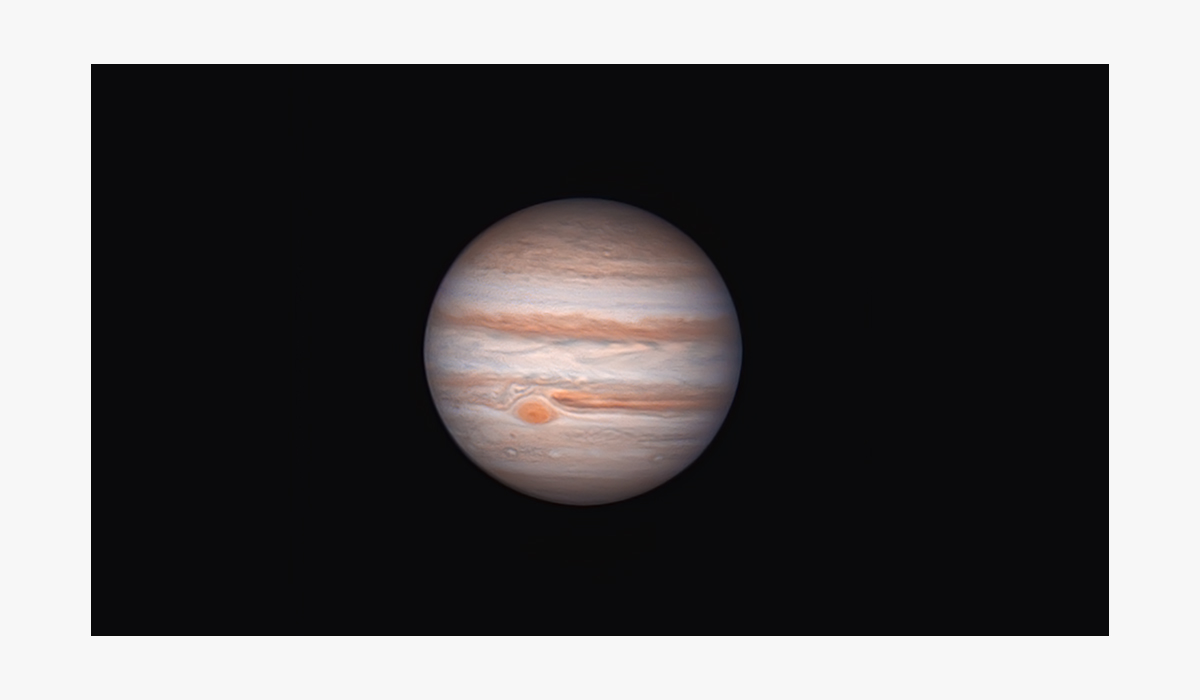
Jupiter captured using the ASI585MC Pro
Jupiter captured using the ASI585MC Pro.
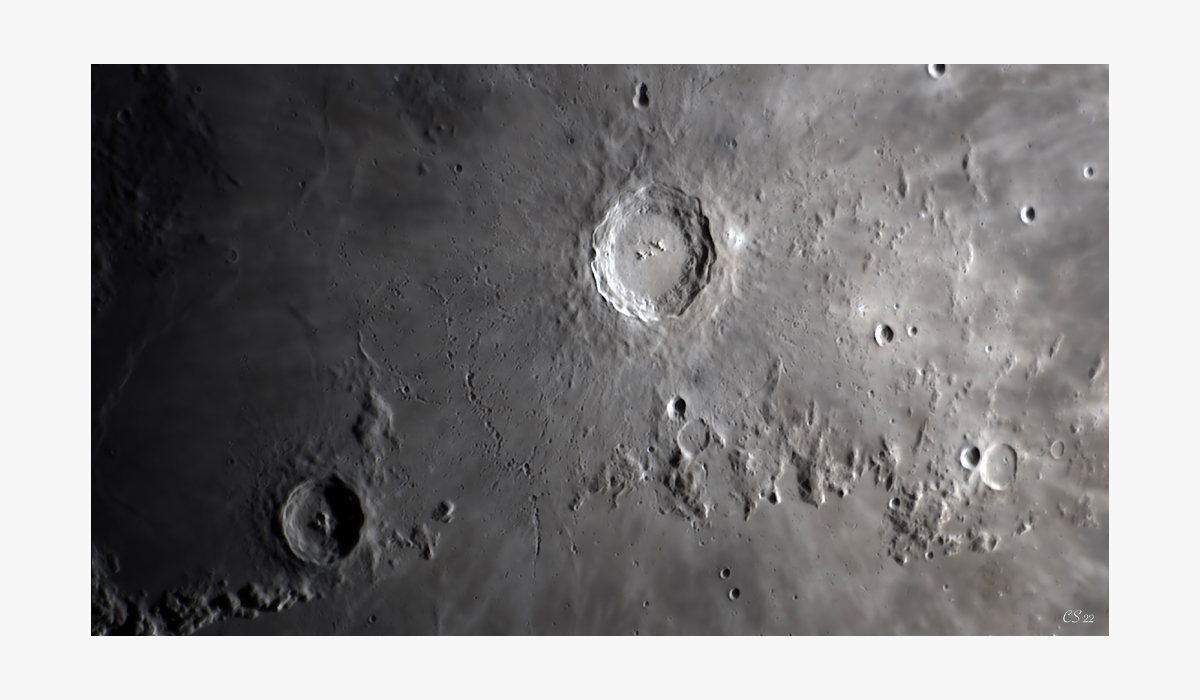
Moon captured using the ASI585MC Pro
The high frame rate also makes the camera an excellent performer for detailed lunar imaging.
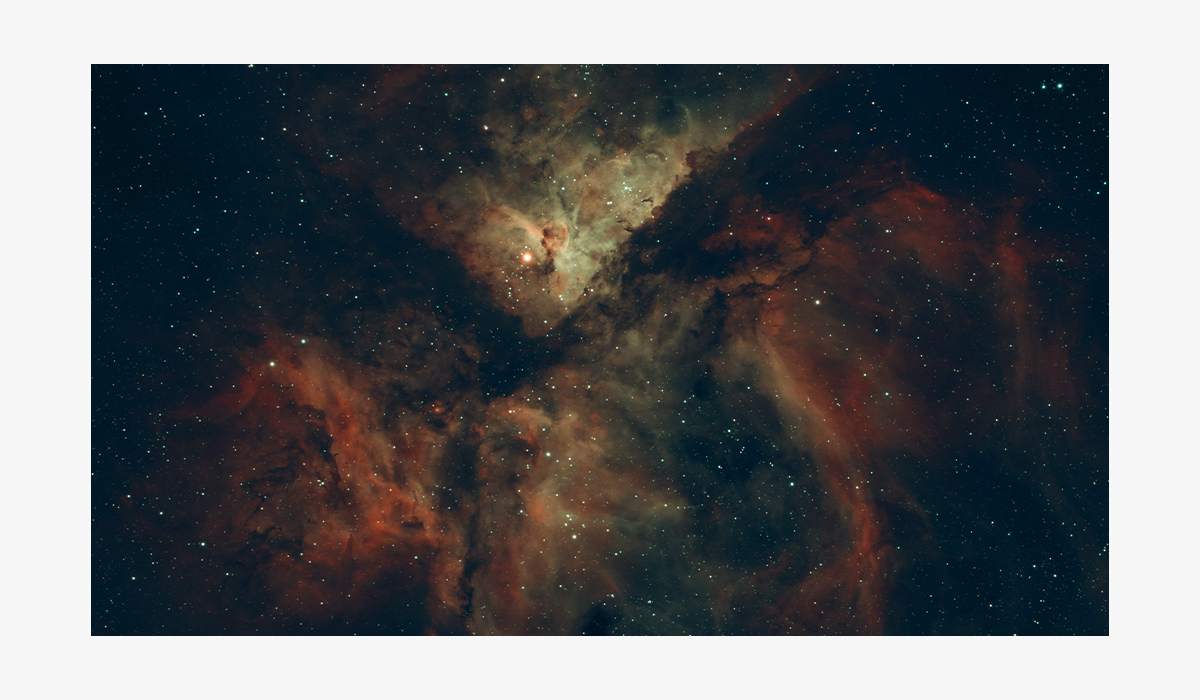
NGC3372 captured using the ASI585MC Pro
Long-exposure imaging reveals impressive deep-sky performance from the cooled IMX585 sensor.
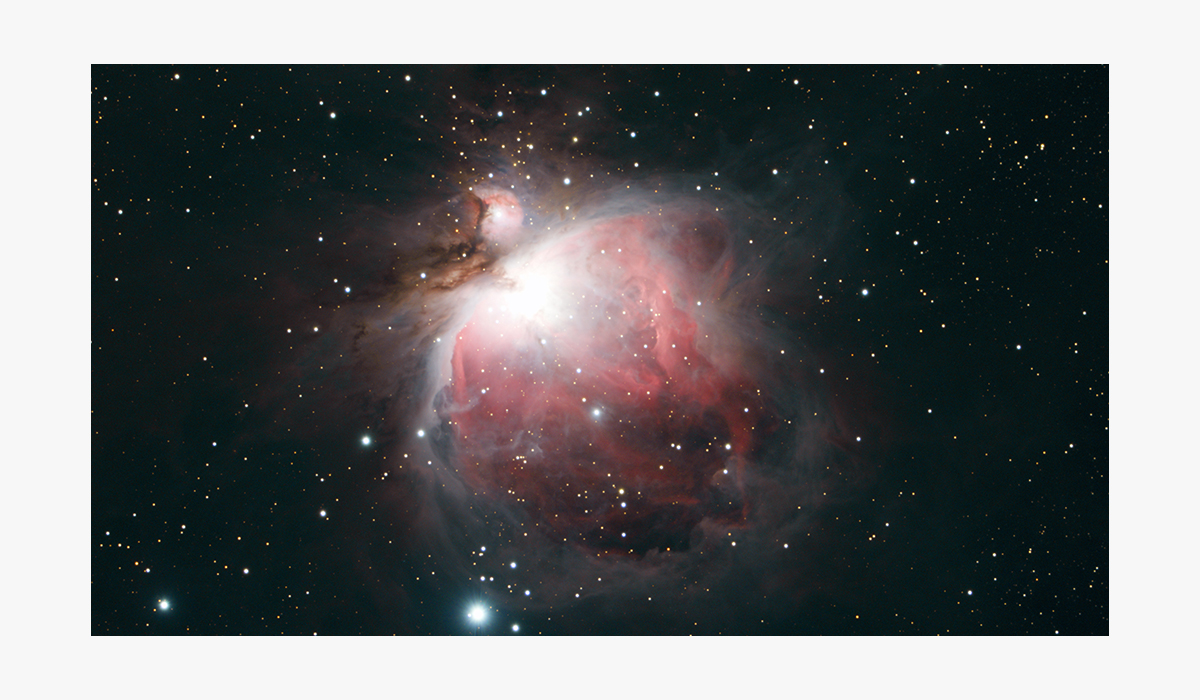
M42 captured using the ASI585MC Pro
The Orion Nebula demonstrates the camera's ability to record both bright and faint detail.

STARVIS 2 Technology Explained

STARVIS 2 is Sony's latest generation of back-illuminated sensor technology, designed to improve both sensitivity and dynamic range compared with earlier STARVIS sensors. The improvements are particularly noticeable when imaging under low-light conditions, making the technology ideally suited to astronomical imaging.

For astrophotographers, this means cleaner images with improved colour reproduction, stronger signal collection and reduced noise when working with faint deep-sky targets. Combined with efficient sensor cooling, the STARVIS 2 architecture allows the ASI585MC Pro to extract more useful information from every exposure.

Another advantage is the excellent response beyond the visible spectrum. The enhanced near-infrared sensitivity makes this camera particularly appealing for planetary imagers who frequently use IR-pass filters to improve image sharpness during average atmospheric conditions.

Sony STARVIS 2 technology

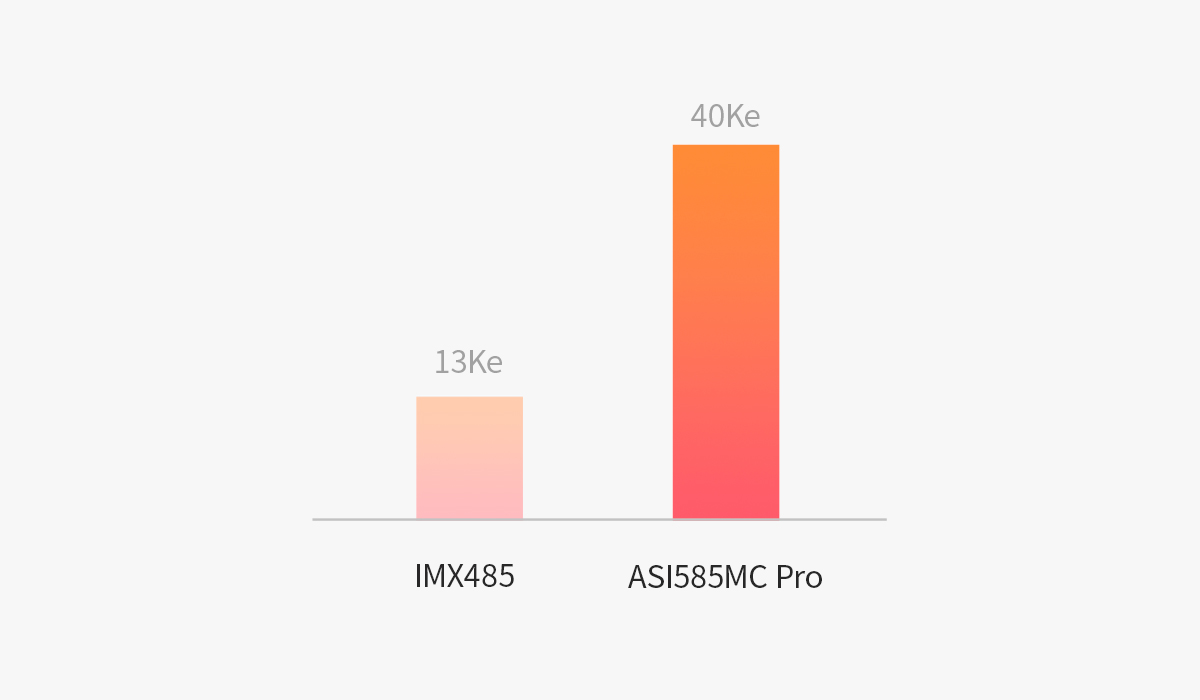
STARVIS 2 performance comparison

Large Full Well Capacity – Why It Matters

One of the biggest improvements offered by Sony's IMX585 sensor is its significantly larger full well capacity compared with previous generations. While this specification often gets overlooked, it has a direct impact on the quality of your final images.

A pixel with a larger full well capacity can collect more photons before reaching saturation. In practical terms, this means bright stars retain more colour and detail instead of quickly becoming featureless white discs. At the same time, faint nebulosity and delicate dust lanes remain easier to process because the camera records a broader range of brightness levels within a single exposure.

Even though the ASI585MC Pro uses compact 2.9μm pixels, Sony's latest back-illuminated sensor design allows each pixel to store around 40,000 electrons, giving performance that would previously have required considerably larger pixels. The result is a camera capable of recording both bright highlights and extremely faint detail with impressive efficiency. :contentReference[oaicite:0]{index=0}

Whether you are imaging the Orion Nebula, the Lagoon Nebula or bright star clusters, the increased full well capacity helps produce smoother data with improved dynamic range and less risk of clipped highlights.

ASI585MC Pro Full Well Capacity

Zero Amp Glow – Cleaner Images Straight Out of the Camera

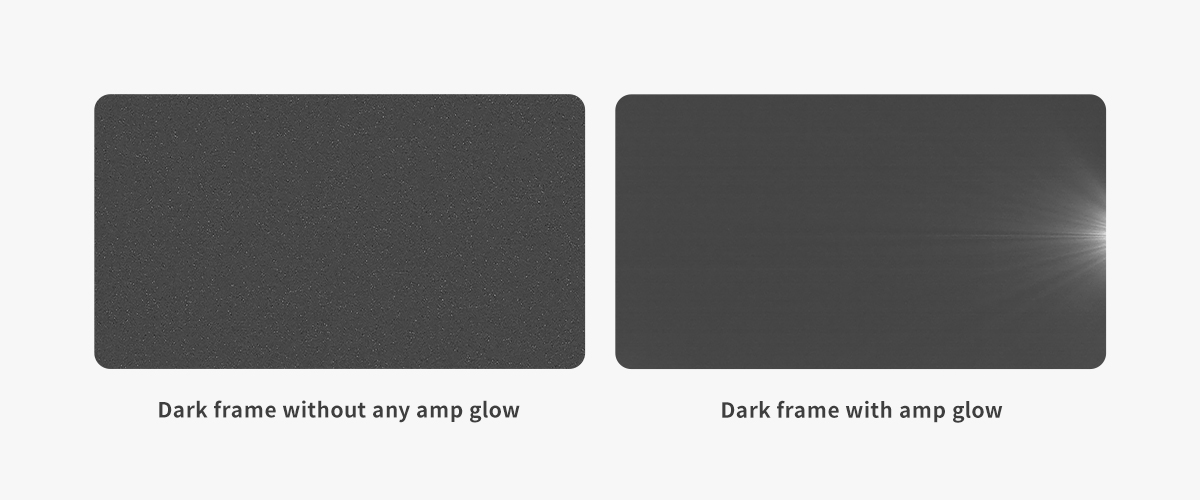
Amp glow was once one of the biggest frustrations in CMOS astrophotography. During long exposures, many cameras developed bright glowing regions around the edges of each frame, requiring careful calibration to remove during image processing.

The ASI585MC Pro eliminates this problem through hardware-level sensor design. Regardless of exposure length or gain setting, the camera produces exceptionally clean dark frames without the bright corners that affected many earlier CMOS sensors. :contentReference[oaicite:1]{index=1}

For beginners, this means image processing becomes considerably easier. For experienced astrophotographers, it means calibration frames work more consistently and valuable imaging time is spent collecting signal rather than correcting unwanted artefacts.

The benefit becomes particularly noticeable during narrowband imaging, long winter imaging sessions and multi-hour integrations where sensor cleanliness has a significant impact on the final result.

Zero amp glow isn't simply a marketing feature—it's one of the reasons modern Sony sensors have become so highly regarded throughout the astrophotography community.

Zero Amp Glow comparison

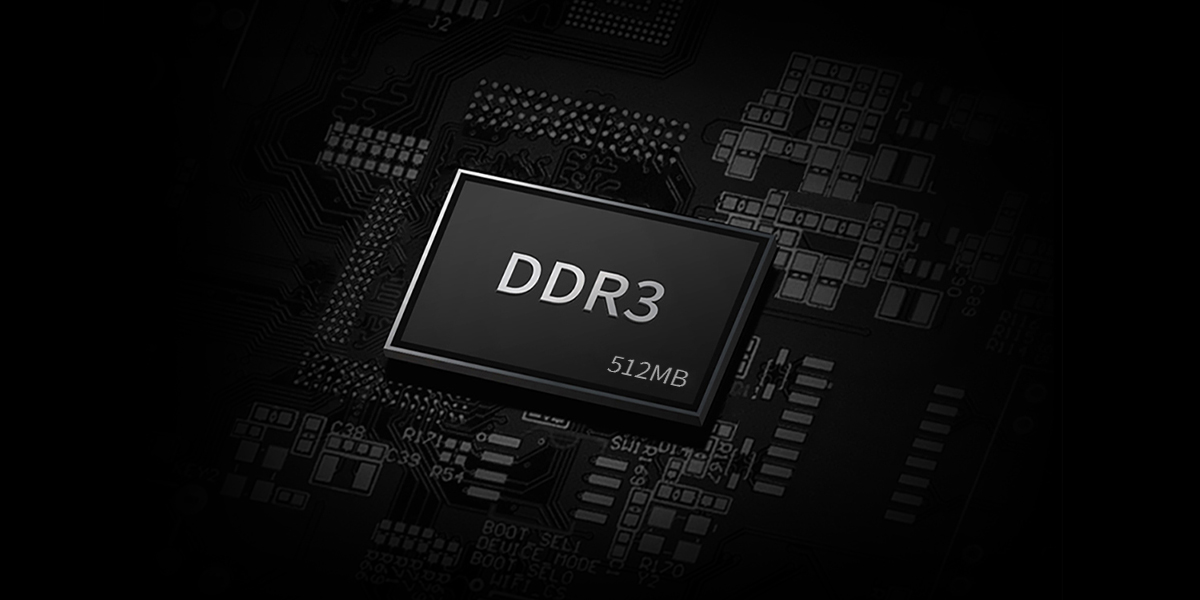
512MB DDR3 Memory Buffer

The ASI585MC Pro incorporates a high-speed 512MB DDR3 memory buffer between the imaging sensor and the USB interface. While invisible during normal operation, this component plays an important role in maintaining stable data transfer.

When capturing long exposures, the buffer temporarily stores image data before transferring it to your computer. This helps reduce frame drops, improves transmission reliability and ensures consistent downloads even when using longer USB cables or slower computers.

Planetary imagers also benefit because thousands of high-speed frames can be streamed more smoothly during extended capture sessions.

It's one of those features that often goes unnoticed until you compare cameras that don't include it. Stable downloads simply mean fewer interruptions and more productive nights under the stars.

512MB DDR3 Buffer

USB 3.0 Performance and Integrated USB Hub

High-speed planetary imaging depends on one thing above almost everything else—frame rate. The more individual frames captured during short periods of steady atmospheric seeing, the greater the chance of producing exceptionally detailed final images.

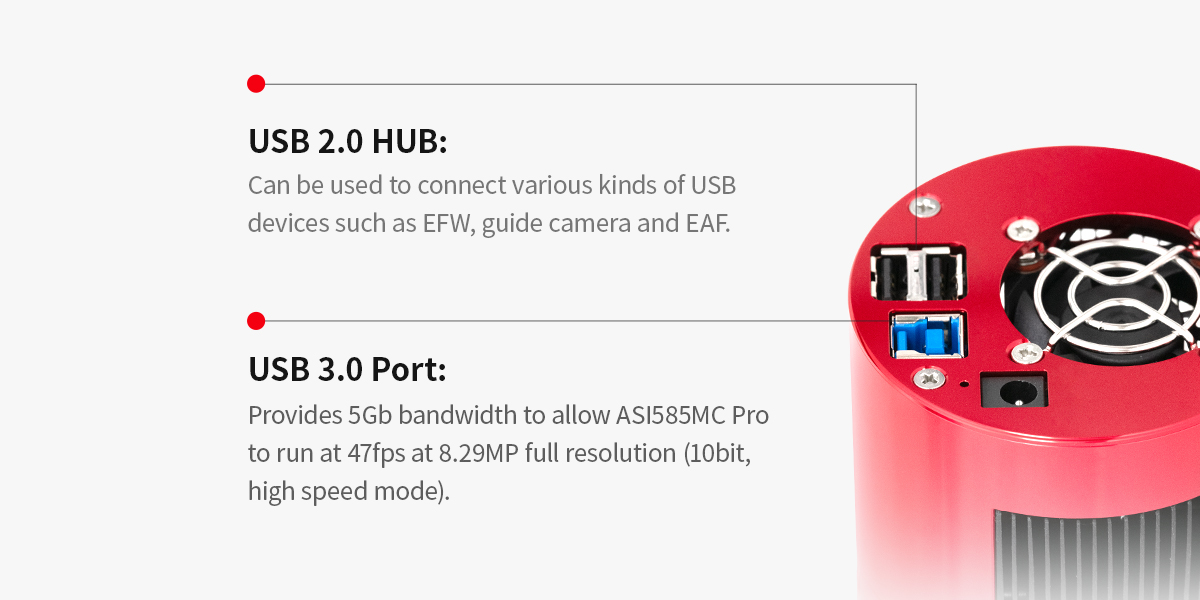
The USB 3.0 interface provides up to 5Gbps bandwidth, allowing the ASI585MC Pro to achieve frame rates approaching 47 frames per second at full 8.29 megapixel resolution. Faster frame rates are possible when using smaller Regions of Interest (ROI), making the camera particularly effective for planetary imaging. :contentReference[oaicite:2]{index=2}

ZWO also includes an integrated USB 2.0 hub, allowing accessories such as the Electronic Automatic Focuser (EAF), Electronic Filter Wheel (EFW) or guide cameras to connect directly through the camera body. This reduces cable clutter and helps create a cleaner, more reliable imaging setup.

USB 3.0 and USB Hub

Two-Stage TEC Cooling

Cooling is one of the biggest advantages dedicated astronomy cameras have over standard DSLR and mirrorless cameras. During long exposures, every imaging sensor generates heat, and that heat creates unwanted electronic noise.

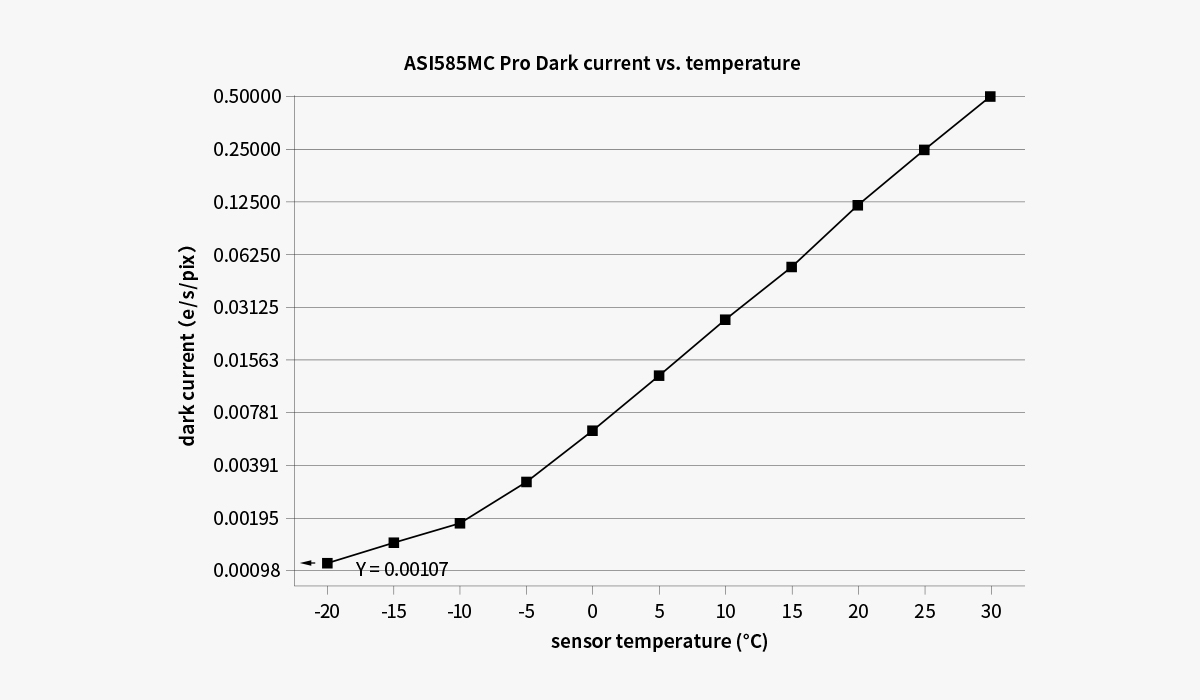
The ASI585MC Pro uses an efficient two-stage thermoelectric cooling system capable of reducing the sensor temperature by as much as 35°C below ambient conditions. Lower sensor temperatures dramatically reduce dark current, producing smoother background data and making faint astronomical detail much easier to process. :contentReference[oaicite:3]{index=3}

Another important advantage is consistency. Because the sensor can be cooled to a repeatable temperature, calibration frames such as darks can be reused over multiple imaging sessions, saving valuable time whenever clear skies appear.

This makes the ASI585MC Pro particularly attractive for anyone planning serious deep-sky imaging, even though the camera remains equally capable as a high-performance planetary imager.

Two-stage TEC Cooling

Real-World Planetary Performance

If your primary interest is imaging the Solar System, the ZWO ASI585MC Pro is one of the best value colour planetary cameras currently available. Its combination of fast frame rates, exceptionally low read noise and high sensitivity allows it to record remarkable levels of detail from even relatively modest telescopes.

High-speed imaging is the key to successful planetary photography. Instead of taking a single long exposure, thousands of individual frames are captured over a period of one or two minutes. Specialist stacking software then analyses every frame, selecting only the sharpest images taken during brief moments of steady atmospheric seeing.

The ASI585MC Pro is perfectly suited to this workflow. Running at up to 47 frames per second at full resolution, or considerably faster when using a cropped Region of Interest, it allows large numbers of frames to be captured in a very short period of time. More good frames generally lead to more detailed final images.

Jupiter, Saturn and Mars all benefit from the camera's excellent colour reproduction and impressive dynamic range. Subtle cloud belts, storms, polar caps and fine atmospheric detail become much easier to record, particularly when paired with quality Schmidt-Cassegrain, Maksutov or Newtonian telescopes.

The excellent near-infrared response of the IMX585 sensor is another major advantage. Infrared-pass filters often produce noticeably sharper planetary images because longer wavelengths are less affected by atmospheric turbulence. For many experienced imagers, this alone makes the ASI585MC Pro a very attractive choice.

Lunar Imaging

The Moon is one of the easiest astronomical objects to photograph, but producing truly detailed lunar images requires a camera capable of capturing large numbers of sharp frames very quickly. The ASI585MC Pro excels in this role.

Its 8.29 megapixel resolution captures an impressive amount of surface detail while still allowing high frame rates. Large craters, mountain ranges, rilles and delicate ejecta patterns can all be recorded with remarkable clarity when combined with good seeing conditions.

The relatively large sensor also reduces the number of panels required when creating high-resolution lunar mosaics, saving both capture time and post-processing effort.

Solar Imaging

When used with the correct solar filters or dedicated hydrogen-alpha solar telescopes, the ASI585MC Pro becomes an outstanding solar imaging camera.

The camera's high frame rate allows short exposures to freeze atmospheric turbulence, while the excellent sensitivity helps reveal intricate solar detail including sunspots, granulation, prominences and filaments. Its compact 2.9μm pixels also provide excellent sampling for many popular solar telescopes without requiring excessive focal length.

Important: Never point any telescope towards the Sun without an approved solar filter fitted securely over the front of the telescope.

Deep-Sky Performance

Although many people initially purchase the ASI585MC Pro for planetary work, its cooled design means it is also a surprisingly capable deep-sky imaging camera.

The two-stage TEC cooling system dramatically reduces thermal noise during long exposures, while the low read noise and excellent quantum efficiency allow faint astronomical objects to be recorded efficiently.

Its sensor size sits comfortably between traditional planetary cameras and larger APS-C cameras. While it doesn't provide the extremely wide fields of view available from larger sensors such as the IMX571, many users actually find this format easier to frame galaxies, planetary nebulae, globular clusters and smaller emission nebulae.

Bright objects such as M42, M27, M57, M13, the Rosette Nebula, the Lagoon Nebula and countless galaxies all suit the sensor exceptionally well when paired with an appropriate telescope.

For astronomers upgrading from a DSLR, the improvement in thermal noise, sensitivity and calibration consistency is immediately noticeable.

Electronically Assisted Astronomy (EAA)

The ASI585MC Pro is also an excellent camera for Electronically Assisted Astronomy, often referred to as EAA.

Rather than spending hours collecting exposures for later processing, EAA allows astronomical objects to build live on your computer or tablet screen through continuous image stacking. This approach is particularly popular for outreach events, club meetings and observers who simply want to enjoy deep-sky objects in real time.

The camera's combination of high sensitivity, efficient cooling and rapid image downloads makes it particularly effective for this style of observing.

Recommended Telescope Pairings

Telescope Ideal Use Rating
ZWO FF65 APO Wide-field deep sky ★★★★★
Askar FRA400 Nebulae & galaxies ★★★★★
Askar SQA55 Portable imaging ★★★★★
8" Schmidt-Cassegrain Planetary imaging ★★★★★
9.25" Schmidt-Cassegrain Planetary & lunar ★★★★★
127mm Maksutov High-resolution planets ★★★★★

Who Should Buy the ASI585MC Pro?

We believe the ASI585MC Pro is an excellent choice for:

  • First-time astronomy camera buyers.
  • Planetary imagers wanting a premium colour camera.
  • Observers looking for one camera capable of both planetary and deep-sky imaging.
  • Electronically Assisted Astronomy enthusiasts.
  • DSLR users upgrading to their first cooled astronomy camera.
  • Travelling astrophotographers wanting a compact imaging system.
  • Anyone looking for one of the best-value cooled colour cameras currently available.

Who Should Consider Another Camera?

Although the ASI585MC Pro is extremely versatile, another camera may be more suitable if your imaging goals are very specific.

  • If your main interest is very large nebulae, an APS-C camera such as the ASI2600MC Pro provides a significantly wider field of view.
  • If you only image planets and have no interest in deep-sky photography, a dedicated high-speed planetary camera without cooling may offer better value.
  • If you intend to build a mono LRGB or narrowband imaging system, one of ZWO's monochrome cameras will provide greater flexibility.

ASI585MC Pro vs ASI533MC Pro

These are two of ZWO's most popular cooled colour astronomy cameras, but they are designed with slightly different priorities.

The ASI585MC Pro is the more versatile choice if your interests include planetary imaging, lunar photography, solar imaging and deep-sky astrophotography. Its high frame rates, excellent near-infrared sensitivity and compact sensor make it equally comfortable imaging Jupiter one evening and galaxies the next.

The ASI533MC Pro, on the other hand, is aimed more towards dedicated deep-sky astrophotography. Its larger square-format sensor provides a wider field of view and is particularly well suited to nebulae, star clusters and wide-field refractor imaging.

If you only intend to image deep-sky objects, the ASI533MC Pro may be the better long-term investment. However, if you want one camera capable of handling almost every type of astronomical imaging, the ASI585MC Pro is arguably the more flexible option.

Feature ASI585MC Pro ASI533MC Pro
Planetary Imaging ★★★★★ ★★★☆☆
Deep Sky ★★★★☆ ★★★★★
Lunar Imaging ★★★★★ ★★★★☆
Solar Imaging ★★★★★ ★★★★☆
Overall Versatility ★★★★★ ★★★★☆

ASI585MC Pro vs ASI678MC

Customers often ask whether they should choose the ASI585MC Pro or the smaller ASI678MC.

The ASI678MC is an exceptional planetary camera, particularly for users with long focal length telescopes. Its smaller pixels provide very fine sampling and make it one of the best dedicated planetary cameras available.

The ASI585MC Pro offers a much broader range of uses. The larger sensor provides a wider field of view, cooling allows genuine long-exposure imaging, and the increased sensor area makes it much more practical for deep-sky photography.

If your imaging is almost exclusively planetary, the ASI678MC remains a superb choice. If you want one camera capable of almost everything, the ASI585MC Pro is the stronger all-round performer.

Pros

  • Outstanding Sony STARVIS 2 sensor.
  • Excellent value for money.
  • Suitable for planetary, lunar, solar and deep-sky imaging.
  • Very low read noise.
  • Zero amp glow.
  • Excellent near-infrared sensitivity.
  • Fast USB 3.0 performance.
  • Integrated USB hub.
  • Reliable two-stage TEC cooling.
  • Compact and lightweight design.
  • Compatible with a wide range of astronomy software.
  • Excellent first cooled astronomy camera.

Considerations

  • The smaller sensor produces a narrower field of view than APS-C cameras.
  • Not intended to replace larger-format dedicated deep-sky cameras.
  • Requires an external 12V power supply for cooling.
  • Maximum performance is achieved when paired with a quality telescope and stable mount.

Frequently Asked Questions

Is the ASI585MC Pro suitable for beginners?

Yes. It is one of the easiest cooled astronomy cameras to recommend because it covers both planetary and deep-sky imaging without requiring two separate cameras.

Can the ASI585MC Pro photograph galaxies?

Absolutely. When paired with an appropriate telescope it produces excellent images of galaxies, planetary nebulae and globular clusters.

Can I image planets with this camera?

Yes. Planetary imaging is one of its strongest features thanks to its high frame rate and excellent near-infrared sensitivity.

Does it have amp glow?

No. The hardware design eliminates amp glow, producing exceptionally clean calibration frames.

Can I use it for Electronically Assisted Astronomy?

Yes. Its sensitivity and fast downloads make it an excellent EAA camera.

Is cooling really necessary?

For planetary imaging it is less important, but for long-exposure deep-sky photography the TEC cooling dramatically reduces thermal noise and improves image quality.

Can I use it with ASIAIR?

Yes. The ASI585MC Pro integrates perfectly with the ZWO ASIAIR ecosystem.

Does it support Windows and Mac?

Yes. The camera supports Windows, macOS and Linux through ZWO software and compatible third-party applications.

Which telescope works best?

Short refractors are ideal for deep-sky imaging, while Schmidt-Cassegrain, Maksutov and longer focal length telescopes excel for planetary work.

Is the ASI585MC Pro worth buying?

If you want one camera capable of capturing almost every type of astronomical object, we believe it is one of the best-value cooled colour cameras currently available.

Dark Clear Skies Final Verdict

The ZWO ASI585MC Pro is one of those rare astronomy cameras that comfortably exceeds expectations. Rather than specialising in just one area, it performs exceptionally well across almost every discipline of astrophotography.

Whether you're photographing Jupiter's cloud bands, creating detailed lunar mosaics, recording solar activity or collecting hours of deep-sky data, the camera consistently delivers impressive results. The combination of Sony's STARVIS 2 sensor, zero amp glow, efficient cooling and fast USB performance creates a camera that is enjoyable to use and capable of producing images well beyond what its price might suggest.

For newcomers looking for their first cooled astronomy camera, it represents outstanding value. For experienced astronomers wanting a versatile imaging camera without moving into much larger APS-C systems, it remains one of the strongest options currently available.

Need Advice Choosing the Right ZWO Camera?

Every astrophotographer has different goals, whether that's imaging planets, capturing faint nebulae or building a portable deep-sky imaging system. Choosing the right camera depends on your telescope, mount, targets and budget.

If you're unsure whether the ASI585MC Pro is the right choice, our team is always happy to help you select the best camera for your setup.

Ask the Dark Clear Skies Team →

ZWO ASI585MC Pro (IMX585) Cooled Colour Astronomy Camera

Regular price £619.00
Or £206.33 × 3 interest-free with PayPal

ZWO-ASI585MC-PRO

Specifications

ZWO ASI585MC Pro Review – A Versatile Cooled Camera for Planetary and Deep-Sky Astrophotography

The ZWO ASI585MC Pro is one of the most versatile cooled astronomy cameras in the ZWO range. Built around Sony's outstanding STARVIS 2 IMX585 CMOS sensor, it bridges the gap between dedicated planetary cameras and entry-level deep-sky imaging cameras, making it an excellent choice for astronomers who want one camera capable of tackling almost every type of astrophotography.

Unlike many astronomy cameras that are designed for one specific purpose, the ASI585MC Pro feels equally at home capturing high-speed videos of Jupiter and Saturn, detailed lunar mosaics, solar imaging, Electronically Assisted Astronomy (EAA), and surprisingly capable long-exposure deep-sky photographs. Its combination of a back-illuminated sensor, extremely low read noise, high frame rates and efficient two-stage cooling gives it impressive flexibility whether you're imaging from your garden observatory or travelling to dark sky locations.

For many astrophotographers, versatility matters just as much as outright performance. Investing in a camera that can image planets one evening and galaxies the next offers excellent value, especially for those building their first dedicated imaging system. The ASI585MC Pro delivers exactly that, combining modern sensor technology with ZWO's proven hardware design and broad software compatibility.

Dark Clear Skies Expert Verdict

Overall Rating: 9.7 / 10

The ASI585MC Pro is one of the most capable all-round astronomy cameras currently available. It combines excellent planetary performance with genuine deep-sky capability, making it an outstanding choice for astronomers who don't want separate cameras for every imaging discipline.

Best suited for:

  • Planetary imaging
  • Lunar imaging
  • Solar imaging (with the appropriate filters)
  • Entry-level deep-sky astrophotography
  • Electronically Assisted Astronomy (EAA)
  • Portable imaging setups

Its excellent Sony IMX585 sensor, zero amp glow, impressive near-infrared sensitivity and efficient TEC cooling make it one of the best-value cooled colour cameras in the ZWO range.

Key Features

  • Sony STARVIS 2 IMX585 back-illuminated CMOS sensor
  • 3840 × 2160 (8.29 megapixel) resolution
  • 2.9μm pixel size
  • Large 1/1.2-inch optical format
  • Zero amp glow hardware design
  • Two-stage TEC cooling system
  • Up to 47fps at full resolution
  • 91% peak quantum efficiency
  • 512MB DDR3 image buffer
  • USB 3.0 connectivity
  • Integrated USB 2.0 hub
  • Outstanding near-infrared sensitivity
  • Compatible with Windows, macOS and Linux

ZWO ASI585MC Pro Astronomy Camera

Why Choose the ASI585MC Pro?

The biggest strength of the ASI585MC Pro is its flexibility. Many cooled astronomy cameras are designed almost exclusively for long-exposure deep-sky imaging, while smaller planetary cameras sacrifice cooling in favour of frame rate. The ASI585MC Pro successfully combines both approaches into a single compact camera.

For planetary imaging, the camera's high-speed USB 3.0 interface and rapid frame rates allow thousands of individual frames to be captured in only a few minutes. These frames can then be stacked to overcome atmospheric turbulence and reveal remarkably fine detail on planets such as Jupiter, Saturn and Mars.

Switch to deep-sky imaging and the camera's two-stage TEC cooling dramatically reduces thermal noise during long exposures. Combined with Sony's STARVIS 2 technology, low read noise and excellent sensitivity, the ASI585MC Pro is capable of producing clean images of bright nebulae, galaxies and star clusters that far exceed what most DSLR cameras can achieve.

Perhaps the most impressive aspect of the IMX585 sensor is its excellent response in the near-infrared spectrum. This benefits planetary imaging by revealing additional detail when using infrared-pass filters and also improves performance under less-than-ideal seeing conditions.

Sony STARVIS 2 IMX585 Sensor

At the heart of the ASI585MC Pro is Sony's IMX585 STARVIS 2 back-illuminated CMOS sensor. This latest generation sensor represents a significant step forward over previous designs, offering improved sensitivity, a larger full well capacity and exceptionally low read noise. While the headline specifications are impressive, the real advantage becomes obvious once you begin imaging.

The back-illuminated architecture allows more incoming light to reach each pixel by moving the sensor electronics behind the light-sensitive surface. More captured photons translate directly into improved signal-to-noise ratio, cleaner images and better performance when imaging faint astronomical objects.

The camera features an 8.29 megapixel resolution (3840 × 2160 pixels) with compact 2.9μm pixels. This combination provides excellent image detail while maintaining fast download speeds and manageable file sizes. Whether you're capturing thousands of planetary frames or collecting several hours of deep-sky exposures, the ASI585MC Pro remains efficient and responsive.

The IMX585 is also notable for its excellent sensitivity in the near-infrared region. When used with infrared-pass filters, planetary imagers can often record sharper images during average seeing conditions because longer wavelengths are less affected by atmospheric turbulence. This has made the ASI585MC Pro particularly popular among serious planetary observers.

ZWO ASI585MC Pro Sony IMX585 Sensor

One Camera for Almost Every Target

Many astronomy cameras excel at one task but struggle with another. The ASI585MC Pro is different. Its combination of high frame rates, efficient cooling and excellent sensor performance means it can comfortably switch between planetary imaging, lunar imaging, solar work, Electronically Assisted Astronomy (EAA) and long-exposure deep-sky photography.

If your interests regularly change throughout the year, this versatility becomes a genuine advantage. During planetary season you can record high-speed video sequences of Jupiter, Saturn and Mars. As galaxy season arrives, the same camera can be mounted behind a refractor or reflector to produce detailed long-exposure images of galaxies, globular clusters and bright nebulae.

This flexibility makes the ASI585MC Pro particularly attractive for astronomers purchasing their first cooled astronomy camera. Rather than investing in separate planetary and deep-sky cameras immediately, one camera can successfully cover both disciplines.
Jupiter captured using the ASI585MC Pro
Jupiter captured using the ASI585MC Pro.
Moon captured using the ASI585MC Pro
The high frame rate also makes the camera an excellent performer for detailed lunar imaging.
NGC3372 captured using the ASI585MC Pro
Long-exposure imaging reveals impressive deep-sky performance from the cooled IMX585 sensor.
M42 captured using the ASI585MC Pro
The Orion Nebula demonstrates the camera's ability to record both bright and faint detail.

STARVIS 2 Technology Explained

STARVIS 2 is Sony's latest generation of back-illuminated sensor technology, designed to improve both sensitivity and dynamic range compared with earlier STARVIS sensors. The improvements are particularly noticeable when imaging under low-light conditions, making the technology ideally suited to astronomical imaging.

For astrophotographers, this means cleaner images with improved colour reproduction, stronger signal collection and reduced noise when working with faint deep-sky targets. Combined with efficient sensor cooling, the STARVIS 2 architecture allows the ASI585MC Pro to extract more useful information from every exposure.

Another advantage is the excellent response beyond the visible spectrum. The enhanced near-infrared sensitivity makes this camera particularly appealing for planetary imagers who frequently use IR-pass filters to improve image sharpness during average atmospheric conditions.

Sony STARVIS 2 technology

STARVIS 2 performance comparison

Large Full Well Capacity – Why It Matters

One of the biggest improvements offered by Sony's IMX585 sensor is its significantly larger full well capacity compared with previous generations. While this specification often gets overlooked, it has a direct impact on the quality of your final images.

A pixel with a larger full well capacity can collect more photons before reaching saturation. In practical terms, this means bright stars retain more colour and detail instead of quickly becoming featureless white discs. At the same time, faint nebulosity and delicate dust lanes remain easier to process because the camera records a broader range of brightness levels within a single exposure.

Even though the ASI585MC Pro uses compact 2.9μm pixels, Sony's latest back-illuminated sensor design allows each pixel to store around 40,000 electrons, giving performance that would previously have required considerably larger pixels. The result is a camera capable of recording both bright highlights and extremely faint detail with impressive efficiency. :contentReference[oaicite:0]{index=0}

Whether you are imaging the Orion Nebula, the Lagoon Nebula or bright star clusters, the increased full well capacity helps produce smoother data with improved dynamic range and less risk of clipped highlights.
ASI585MC Pro Full Well Capacity

Zero Amp Glow – Cleaner Images Straight Out of the Camera

Amp glow was once one of the biggest frustrations in CMOS astrophotography. During long exposures, many cameras developed bright glowing regions around the edges of each frame, requiring careful calibration to remove during image processing.

The ASI585MC Pro eliminates this problem through hardware-level sensor design. Regardless of exposure length or gain setting, the camera produces exceptionally clean dark frames without the bright corners that affected many earlier CMOS sensors. :contentReference[oaicite:1]{index=1}

For beginners, this means image processing becomes considerably easier. For experienced astrophotographers, it means calibration frames work more consistently and valuable imaging time is spent collecting signal rather than correcting unwanted artefacts.

The benefit becomes particularly noticeable during narrowband imaging, long winter imaging sessions and multi-hour integrations where sensor cleanliness has a significant impact on the final result.

Zero amp glow isn't simply a marketing feature—it's one of the reasons modern Sony sensors have become so highly regarded throughout the astrophotography community.

Zero Amp Glow comparison

512MB DDR3 Memory Buffer

The ASI585MC Pro incorporates a high-speed 512MB DDR3 memory buffer between the imaging sensor and the USB interface. While invisible during normal operation, this component plays an important role in maintaining stable data transfer.

When capturing long exposures, the buffer temporarily stores image data before transferring it to your computer. This helps reduce frame drops, improves transmission reliability and ensures consistent downloads even when using longer USB cables or slower computers.

Planetary imagers also benefit because thousands of high-speed frames can be streamed more smoothly during extended capture sessions.

It's one of those features that often goes unnoticed until you compare cameras that don't include it. Stable downloads simply mean fewer interruptions and more productive nights under the stars.
512MB DDR3 Buffer

USB 3.0 Performance and Integrated USB Hub

High-speed planetary imaging depends on one thing above almost everything else—frame rate. The more individual frames captured during short periods of steady atmospheric seeing, the greater the chance of producing exceptionally detailed final images.

The USB 3.0 interface provides up to 5Gbps bandwidth, allowing the ASI585MC Pro to achieve frame rates approaching 47 frames per second at full 8.29 megapixel resolution. Faster frame rates are possible when using smaller Regions of Interest (ROI), making the camera particularly effective for planetary imaging. :contentReference[oaicite:2]{index=2}

ZWO also includes an integrated USB 2.0 hub, allowing accessories such as the Electronic Automatic Focuser (EAF), Electronic Filter Wheel (EFW) or guide cameras to connect directly through the camera body. This reduces cable clutter and helps create a cleaner, more reliable imaging setup.
USB 3.0 and USB Hub

Two-Stage TEC Cooling

Cooling is one of the biggest advantages dedicated astronomy cameras have over standard DSLR and mirrorless cameras. During long exposures, every imaging sensor generates heat, and that heat creates unwanted electronic noise.

The ASI585MC Pro uses an efficient two-stage thermoelectric cooling system capable of reducing the sensor temperature by as much as 35°C below ambient conditions. Lower sensor temperatures dramatically reduce dark current, producing smoother background data and making faint astronomical detail much easier to process. :contentReference[oaicite:3]{index=3}

Another important advantage is consistency. Because the sensor can be cooled to a repeatable temperature, calibration frames such as darks can be reused over multiple imaging sessions, saving valuable time whenever clear skies appear.

This makes the ASI585MC Pro particularly attractive for anyone planning serious deep-sky imaging, even though the camera remains equally capable as a high-performance planetary imager.
Two-stage TEC Cooling

Real-World Planetary Performance

If your primary interest is imaging the Solar System, the ZWO ASI585MC Pro is one of the best value colour planetary cameras currently available. Its combination of fast frame rates, exceptionally low read noise and high sensitivity allows it to record remarkable levels of detail from even relatively modest telescopes.

High-speed imaging is the key to successful planetary photography. Instead of taking a single long exposure, thousands of individual frames are captured over a period of one or two minutes. Specialist stacking software then analyses every frame, selecting only the sharpest images taken during brief moments of steady atmospheric seeing.

The ASI585MC Pro is perfectly suited to this workflow. Running at up to 47 frames per second at full resolution, or considerably faster when using a cropped Region of Interest, it allows large numbers of frames to be captured in a very short period of time. More good frames generally lead to more detailed final images.

Jupiter, Saturn and Mars all benefit from the camera's excellent colour reproduction and impressive dynamic range. Subtle cloud belts, storms, polar caps and fine atmospheric detail become much easier to record, particularly when paired with quality Schmidt-Cassegrain, Maksutov or Newtonian telescopes.

The excellent near-infrared response of the IMX585 sensor is another major advantage. Infrared-pass filters often produce noticeably sharper planetary images because longer wavelengths are less affected by atmospheric turbulence. For many experienced imagers, this alone makes the ASI585MC Pro a very attractive choice.

Lunar Imaging

The Moon is one of the easiest astronomical objects to photograph, but producing truly detailed lunar images requires a camera capable of capturing large numbers of sharp frames very quickly. The ASI585MC Pro excels in this role.

Its 8.29 megapixel resolution captures an impressive amount of surface detail while still allowing high frame rates. Large craters, mountain ranges, rilles and delicate ejecta patterns can all be recorded with remarkable clarity when combined with good seeing conditions.

The relatively large sensor also reduces the number of panels required when creating high-resolution lunar mosaics, saving both capture time and post-processing effort.

Solar Imaging

When used with the correct solar filters or dedicated hydrogen-alpha solar telescopes, the ASI585MC Pro becomes an outstanding solar imaging camera.

The camera's high frame rate allows short exposures to freeze atmospheric turbulence, while the excellent sensitivity helps reveal intricate solar detail including sunspots, granulation, prominences and filaments. Its compact 2.9μm pixels also provide excellent sampling for many popular solar telescopes without requiring excessive focal length.

Important: Never point any telescope towards the Sun without an approved solar filter fitted securely over the front of the telescope.

Deep-Sky Performance

Although many people initially purchase the ASI585MC Pro for planetary work, its cooled design means it is also a surprisingly capable deep-sky imaging camera.

The two-stage TEC cooling system dramatically reduces thermal noise during long exposures, while the low read noise and excellent quantum efficiency allow faint astronomical objects to be recorded efficiently.

Its sensor size sits comfortably between traditional planetary cameras and larger APS-C cameras. While it doesn't provide the extremely wide fields of view available from larger sensors such as the IMX571, many users actually find this format easier to frame galaxies, planetary nebulae, globular clusters and smaller emission nebulae.

Bright objects such as M42, M27, M57, M13, the Rosette Nebula, the Lagoon Nebula and countless galaxies all suit the sensor exceptionally well when paired with an appropriate telescope.

For astronomers upgrading from a DSLR, the improvement in thermal noise, sensitivity and calibration consistency is immediately noticeable.

Electronically Assisted Astronomy (EAA)

The ASI585MC Pro is also an excellent camera for Electronically Assisted Astronomy, often referred to as EAA.

Rather than spending hours collecting exposures for later processing, EAA allows astronomical objects to build live on your computer or tablet screen through continuous image stacking. This approach is particularly popular for outreach events, club meetings and observers who simply want to enjoy deep-sky objects in real time.

The camera's combination of high sensitivity, efficient cooling and rapid image downloads makes it particularly effective for this style of observing.

Recommended Telescope Pairings

Telescope Ideal Use Rating
ZWO FF65 APO Wide-field deep sky ★★★★★
Askar FRA400 Nebulae & galaxies ★★★★★
Askar SQA55 Portable imaging ★★★★★
8" Schmidt-Cassegrain Planetary imaging ★★★★★
9.25" Schmidt-Cassegrain Planetary & lunar ★★★★★
127mm Maksutov High-resolution planets ★★★★★

Who Should Buy the ASI585MC Pro?

We believe the ASI585MC Pro is an excellent choice for:

  • First-time astronomy camera buyers.
  • Planetary imagers wanting a premium colour camera.
  • Observers looking for one camera capable of both planetary and deep-sky imaging.
  • Electronically Assisted Astronomy enthusiasts.
  • DSLR users upgrading to their first cooled astronomy camera.
  • Travelling astrophotographers wanting a compact imaging system.
  • Anyone looking for one of the best-value cooled colour cameras currently available.

Who Should Consider Another Camera?

Although the ASI585MC Pro is extremely versatile, another camera may be more suitable if your imaging goals are very specific.

  • If your main interest is very large nebulae, an APS-C camera such as the ASI2600MC Pro provides a significantly wider field of view.
  • If you only image planets and have no interest in deep-sky photography, a dedicated high-speed planetary camera without cooling may offer better value.
  • If you intend to build a mono LRGB or narrowband imaging system, one of ZWO's monochrome cameras will provide greater flexibility.

ASI585MC Pro vs ASI533MC Pro

These are two of ZWO's most popular cooled colour astronomy cameras, but they are designed with slightly different priorities.

The ASI585MC Pro is the more versatile choice if your interests include planetary imaging, lunar photography, solar imaging and deep-sky astrophotography. Its high frame rates, excellent near-infrared sensitivity and compact sensor make it equally comfortable imaging Jupiter one evening and galaxies the next.

The ASI533MC Pro, on the other hand, is aimed more towards dedicated deep-sky astrophotography. Its larger square-format sensor provides a wider field of view and is particularly well suited to nebulae, star clusters and wide-field refractor imaging.

If you only intend to image deep-sky objects, the ASI533MC Pro may be the better long-term investment. However, if you want one camera capable of handling almost every type of astronomical imaging, the ASI585MC Pro is arguably the more flexible option.

Feature ASI585MC Pro ASI533MC Pro
Planetary Imaging ★★★★★ ★★★☆☆
Deep Sky ★★★★☆ ★★★★★
Lunar Imaging ★★★★★ ★★★★☆
Solar Imaging ★★★★★ ★★★★☆
Overall Versatility ★★★★★ ★★★★☆

ASI585MC Pro vs ASI678MC

Customers often ask whether they should choose the ASI585MC Pro or the smaller ASI678MC.

The ASI678MC is an exceptional planetary camera, particularly for users with long focal length telescopes. Its smaller pixels provide very fine sampling and make it one of the best dedicated planetary cameras available.

The ASI585MC Pro offers a much broader range of uses. The larger sensor provides a wider field of view, cooling allows genuine long-exposure imaging, and the increased sensor area makes it much more practical for deep-sky photography.

If your imaging is almost exclusively planetary, the ASI678MC remains a superb choice. If you want one camera capable of almost everything, the ASI585MC Pro is the stronger all-round performer.

Pros

  • Outstanding Sony STARVIS 2 sensor.
  • Excellent value for money.
  • Suitable for planetary, lunar, solar and deep-sky imaging.
  • Very low read noise.
  • Zero amp glow.
  • Excellent near-infrared sensitivity.
  • Fast USB 3.0 performance.
  • Integrated USB hub.
  • Reliable two-stage TEC cooling.
  • Compact and lightweight design.
  • Compatible with a wide range of astronomy software.
  • Excellent first cooled astronomy camera.

Considerations

  • The smaller sensor produces a narrower field of view than APS-C cameras.
  • Not intended to replace larger-format dedicated deep-sky cameras.
  • Requires an external 12V power supply for cooling.
  • Maximum performance is achieved when paired with a quality telescope and stable mount.

Frequently Asked Questions

Is the ASI585MC Pro suitable for beginners?

Yes. It is one of the easiest cooled astronomy cameras to recommend because it covers both planetary and deep-sky imaging without requiring two separate cameras.

Can the ASI585MC Pro photograph galaxies?

Absolutely. When paired with an appropriate telescope it produces excellent images of galaxies, planetary nebulae and globular clusters.

Can I image planets with this camera?

Yes. Planetary imaging is one of its strongest features thanks to its high frame rate and excellent near-infrared sensitivity.

Does it have amp glow?

No. The hardware design eliminates amp glow, producing exceptionally clean calibration frames.

Can I use it for Electronically Assisted Astronomy?

Yes. Its sensitivity and fast downloads make it an excellent EAA camera.

Is cooling really necessary?

For planetary imaging it is less important, but for long-exposure deep-sky photography the TEC cooling dramatically reduces thermal noise and improves image quality.

Can I use it with ASIAIR?

Yes. The ASI585MC Pro integrates perfectly with the ZWO ASIAIR ecosystem.

Does it support Windows and Mac?

Yes. The camera supports Windows, macOS and Linux through ZWO software and compatible third-party applications.

Which telescope works best?

Short refractors are ideal for deep-sky imaging, while Schmidt-Cassegrain, Maksutov and longer focal length telescopes excel for planetary work.

Is the ASI585MC Pro worth buying?

If you want one camera capable of capturing almost every type of astronomical object, we believe it is one of the best-value cooled colour cameras currently available.

Dark Clear Skies Final Verdict

The ZWO ASI585MC Pro is one of those rare astronomy cameras that comfortably exceeds expectations. Rather than specialising in just one area, it performs exceptionally well across almost every discipline of astrophotography.

Whether you're photographing Jupiter's cloud bands, creating detailed lunar mosaics, recording solar activity or collecting hours of deep-sky data, the camera consistently delivers impressive results. The combination of Sony's STARVIS 2 sensor, zero amp glow, efficient cooling and fast USB performance creates a camera that is enjoyable to use and capable of producing images well beyond what its price might suggest.

For newcomers looking for their first cooled astronomy camera, it represents outstanding value. For experienced astronomers wanting a versatile imaging camera without moving into much larger APS-C systems, it remains one of the strongest options currently available.

Need Advice Choosing the Right ZWO Camera?

Every astrophotographer has different goals, whether that's imaging planets, capturing faint nebulae or building a portable deep-sky imaging system. Choosing the right camera depends on your telescope, mount, targets and budget.

If you're unsure whether the ASI585MC Pro is the right choice, our team is always happy to help you select the best camera for your setup.

Ask the Dark Clear Skies Team →

ZWO ASI585MC Pro
ZWO ASI585MC Pro (IMX585) Cooled Colour Astronomy Camera

Pairs well with

Drawer Title
Similar Products