
Dark Clear Skies • Smart telescope buying guide
DWARFLAB DRACO vs Seestar S50 Pro
A bigger imaging system, a lighter travelling companion, or a route into SHO nebula photography? Here is how to choose for the sky you have and the way you want to use it.
Updated 28 September 2026 • Detailed specification-based comparison • Dark Clear Skies stocks both ranges.
Editorial basis: this is a researched buying guide, not a claim that we have completed a side-by-side field test. Product photographs and promotional illustrations are manufacturer material from our listings. They are not matched test exposures. Firmware, availability and launch offers can change.


The buying decision in a minute
Choose S50 Pro for portability and value
Our first recommendation for someone who wants a manageable first smart telescope, regular garden sessions and a system that is easier to take away. Its lower price also leaves more money for useful support equipment or a trip to darker skies.
View Seestar S50 ProSee Seestar S50 Pro sample images with exposure times, including a processed 30-minute M33 galaxy capture.
Choose DRACO for a more ambitious imaging brief
The stronger candidate on paper when aperture and specialist nebula work matter more than carrying weight. The SHO edition is particularly relevant if measuring sulphur emission, rather than simply changing an image’s colours, is part of your plan.
Compare DRACO editionsThere is no universal winner. The useful question is which compromises you will notice every time you observe. A heavier instrument left indoors produces fewer images than a smaller one you use regularly; equally, buying around portability alone can leave a committed imager wanting a different capability later.
Specifications that matter
These are advertised specifications, not measurements from our own test bench. DRACO data also follows our current product specification sheet; the S50 Pro entries use ZWO’s current specifications and manual.
| Feature | DRACO Standard / SHO | Seestar S50 Pro |
|---|---|---|
| Main aperture | 90 mm | 50 mm |
| Native focal length | 340 mm | 260 mm |
| Focal ratio | Approximately f/3.8 | f/5.2 |
| Main sensor format | 1/1.3 inch | 1/1.2 inch |
| Main imaging resolution | 50 MP native; approximately 12 MP with 2×2 deep-sky binning | 8.3 MP; 2160 × 3840 |
| Pixel pitch | Approximately 1.2 µm native / 2.4 µm binned | 2.9 µm |
| Wide-angle camera | 1/1.55-inch format; 73.20° horizontal × 58.23° vertical | 1/2-inch format; 4K; quoted portrait field 63° |
| Main unit mass | 5.5 kg | 2.8 kg |
| Storage | 128 GB advertised | 128 GB; approximately 100 GB available |
| Battery | 10,000 mAh; approximately 5 hours advertised | 10,000 mAh; up to 9 hours in ZWO’s stated laboratory conditions |
| Nebula filters | Hα/O III in both; additional S II/O III in SHO | Hα/O III dual-band |
| Solar filtering | Standard: built-in ND; SHO: external ND supplied | External magnetic solar filter |
| Advertised long exposure | Up to 300 seconds with built-in guiding | 60 seconds requires EQ mode and accurate polar alignment |
| Still-image export | JPG, PNG, TIFF, FITS | JPEG, FITS |
Sources: DCS DRACO specifications, DWARFLAB DRACO overview, ZWO S50 Pro specifications and S50 Pro manual. Wide-angle figures use different conventions; do not compare them as if both were diagonal measurements.
What the optics mean for your photographs
Aperture is a meaningful difference
Using diameter alone, the ratio of entrance areas is (90 ÷ 50)² = 3.24. That is a geometric comparison before optical losses, obstruction, sensor response, filtering and processing. It is not a promise that DRACO finishes every target 3.24 times faster.
A larger aperture also raises the potential resolution limit. Whether that extra potential appears in the finished photograph depends on atmospheric steadiness, focus, tracking, optical quality and sampling. We would want equal-time, equally processed star fields before awarding a measured sharpness winner.
Focal ratio does not tell the whole story
The nominal f/3.8 versus f/5.2 comparison gives approximately (5.2 ÷ 3.8)² = 1.87 times the image-plane illumination for an extended target, assuming equal optical transmission. Pixels are different sizes here, so that is not a direct per-pixel sensitivity result either. Aperture, focal ratio and pixel scale need to be considered together.
DRACO’s 50 MP headline and its normal binned deep-sky output describe different readout modes. More pixels can sample finer detail, but they cannot create detail that the optics, atmosphere or collected signal did not record.
Sampling: a useful calculation, not a test result
Using 206.265 × pixel size in microns ÷ focal length in millimetres, the nominal sampling is about 1.46 arcseconds per pixel for binned DRACO and 2.30 arcseconds per pixel for S50 Pro. DRACO’s native sampling is approximately 0.73 arcseconds per pixel. These calculations use the specification values above; they do not measure real resolving power.
For the buyer, finer sampling is most interesting when there is enough signal and stable enough tracking to support it. For a pleasing phone-sized picture, clean processing and successful integration time may matter more than the pixel count printed on the box.


Tracking, field rotation and longer exposures
Tracking keeps a target centred. Field rotation is the changing orientation of the sky within an alt-azimuth frame. Correcting drift and correcting rotation are different jobs; good tracking alone does not remove rotation during an exposure.
DRACO is advertised with guiding and exposures up to 300 seconds. Our listing also describes physical sensor derotation. The currently accessible manufacturer overview does not fully specify derotation’s operating limits, so this guide does not promise five-minute, trail-free frames in every position or mode. That claim needs the final operating instructions and field evidence.
ZWO explicitly limits its advertised 60-second exposure option to equatorial mode with accurate polar alignment. An EQ arrangement adds setup work, and the supporting head, plate and tripod must safely hold the instrument at the required angle. Check the appropriate S50 Pro mounting combination before assuming that older accessories will fit. ZWO’s EQ notes.

Longer is not automatically better
A five-minute frame lost to cloud loses five minutes of data. A shorter sub-exposure can be easier to salvage between passing clouds, while long subs may reduce the relative contribution of read noise in suitable conditions. Bright targets can saturate, wind can spoil tracking and a satellite can cross the field. Judge the final accepted integration, not just the longest exposure in a menu.
For a fair test, give each telescope the same total time on the same target, record rejected frames, use comparable processing and disclose the sky conditions. A polished promotional image with an unknown exposure history cannot settle that comparison.
DRACO Standard vs SHO: the important distinction
The Standard and SHO choices are primarily filter-system choices. The current DRACO listing specifies the same core optics and cameras for both. Standard includes an internally switched solar filter; SHO uses that internal position for the extra S II/O III filter and supplies an external solar filter instead. Edition details.
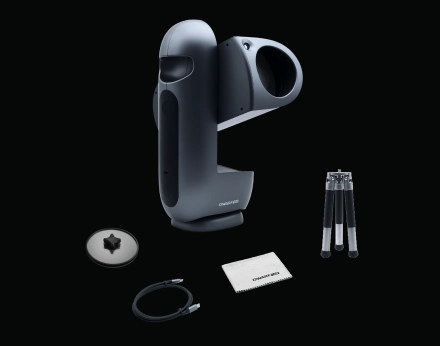
What SHO actually adds
SHO refers to sulphur, hydrogen and oxygen emission mapped into colour channels. The extra sulphur-sensitive capture gives the SHO system an additional source of spectral information for suitable emission nebulae. Recolouring an ordinary two-band image into blue and gold cannot recover a sulphur measurement that was never taken.
There is still interpretation involved: colour mapping, separation and processing affect the result. A colour-camera system using dual-band filters is not identical to a monochrome camera exposing through three individual narrowband filters. It offers a more integrated route to a particular style of imaging, with its own trade-offs.
Standard makes sense when…
You want DRACO’s main imaging platform, expect to photograph a mixture of targets, and value internal solar-filter switching more than the additional sulphur channel.
SHO makes sense when…
Emission nebulae are a major reason for buying, you want to explore channel-based colour work, and you accept fitting the external solar filter when required.
Filters help selectively
Emission-line filtering can improve the contrast of suitable nebulae against unwanted background light. It does not cancel every form of light pollution, and it is not the default answer for galaxies, reflection nebulae or natural star colours. Match the filter to the target rather than leaving the strongest filtering selected all night.
Which targets suit your plans?
| Your main interest | How we would approach the choice |
|---|---|
| Bright nebulae and first deep-sky images | Start with portability, budget and the time available to observe. You do not need to buy the most specialised edition to learn framing and stacking. |
| Detailed emission-nebula projects | Give DRACO SHO serious consideration if the additional sulphur information is something you intend to use. |
| Galaxies and star clusters | Consider DRACO’s aperture and sampling potential, but assess genuine equal-time results before expecting a particular gain. |
| Large nebulae and Andromeda | Check framing in the app, including orientation. A mosaic takes extra capture time and can encounter changing sky conditions between panels. |
| Milky Way trips and nightscapes | Consider the wide camera and total carrying burden together. A dark location matters greatly for this use. |
| Moon and Sun | Judge focus, exposure control and the actual detail in sample captures. Solar-filter handling is part of the buying decision. |
| Close-up planetary detail | Neither should be bought solely on a megapixel claim. Compare actual planetary recordings and consider whether a dedicated planetary telescope better matches your goal. |

Wide-field nightscapes and telephoto deep-sky work are different photographic tasks. A pleasing Milky Way arch does not establish how well a telescope records a small galaxy, and a detailed nebula does not tell you how naturally it blends the landscape foreground.
Living with either telescope under UK skies
Carrying weight is more than a specification
The published main-unit difference is 2.7 kg. That matters when walking to a dark site, lifting equipment repeatedly or packing around other family luggage. Add the actual tripod, protective storage, power supply and accessories before deciding that either system fits your travel allowance.
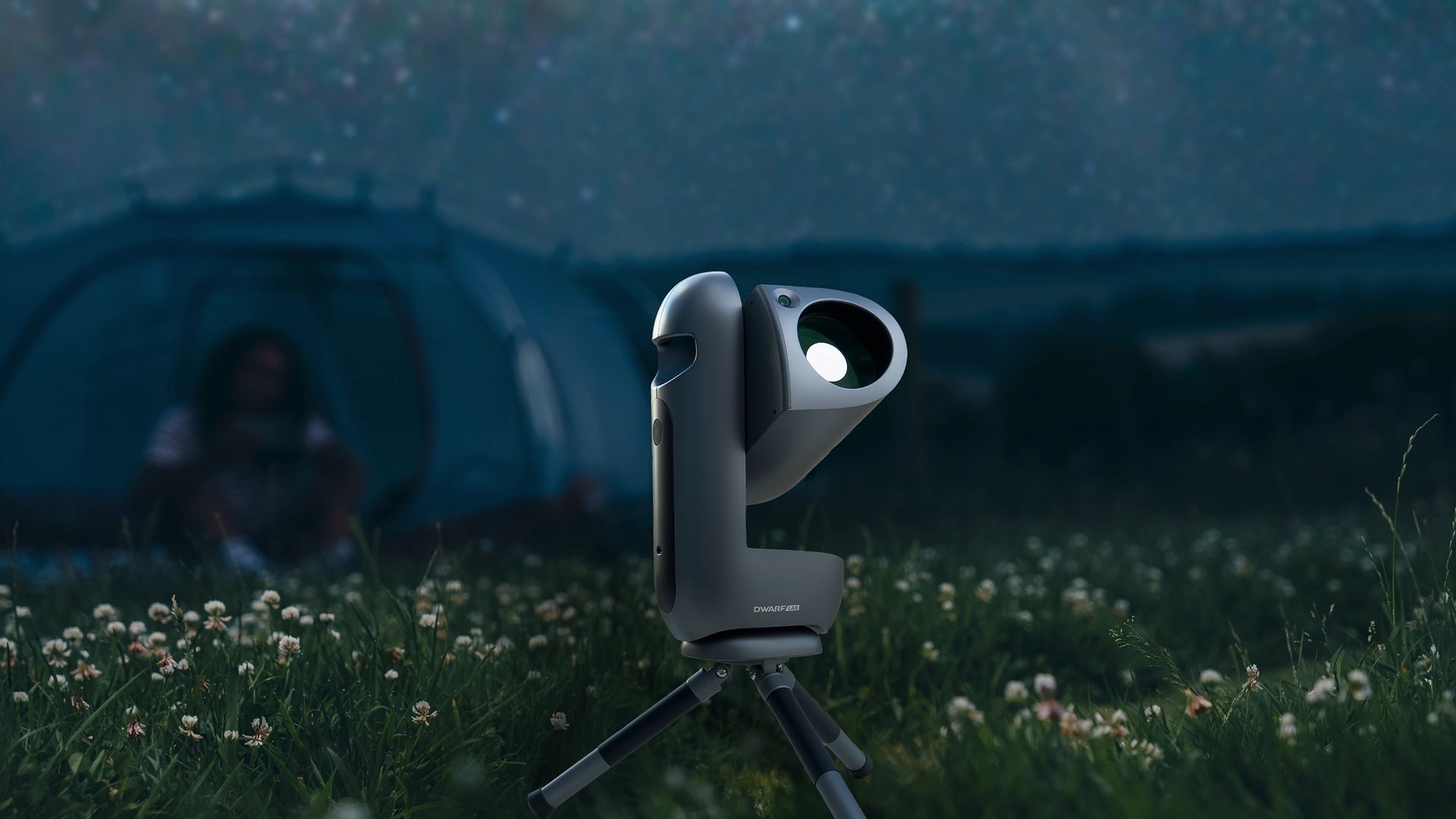
Power through a cold session
Do not treat identical mAh figures as identical energy or endurance: voltage, power consumption, heater use and temperature all matter. ZWO’s nine-hour figure was measured above 25°C in a stated alt-azimuth telephoto mode, a very different setting from a cold, damp UK night. Plan a suitable external-power option for longer sessions rather than relying on a best-case runtime. Battery test conditions.
Dew, wind and weather
A stable base and a clear view of the sky make a better starting point than adding processing after a blurred session. Check dew-control settings, keep cables clear of moving parts and monitor the forecast. Automation does not make a telescope rainproof. ZWO’s manual specifically cautions against water exposure; its product notes say weather disruption does not automatically switch the device off. Operating guidance.
Make the first night a simple one
Complete app installation, activation and updates before travelling. Start with one bright, well-positioned target and a modest session. Check focus and the first accepted frames before committing to a long schedule. Building a reliable routine is more useful than changing every advanced setting on the first evening.
Software, processing and keeping your data
The app is part of the instrument. Before choosing, look at how clearly it handles target selection, framing, focus, exposure settings, rejected frames, saving and exporting. A feature list cannot show how comfortable a workflow feels on your own phone.
Both manufacturers advertise automated capture and image processing. DRACO’s listed export options include TIFF and PNG alongside FITS and JPG; S50 Pro lists FITS and JPEG. The practical priority is whether you can retain the capture data you need, understand which files are original or processed, and move them reliably into your preferred workflow.
Keep an untouched copy before experimenting with strong denoising, star removal or colour changes. For a technical comparison, use equally restrained processing. For an image you simply enjoy sharing, choose the appearance you prefer, while keeping the capture history clear.
Remote use needs a complete plan
Remote features do not remove the need for weather protection, dependable power, connectivity and a way to recover from a stalled session. Verify the current service terms and firmware support before buying for unattended operation. ZWO describes its remote-access service as a beta free trial, so permanent free access should not be assumed. Remote-access notes.
UK price and the whole-system budget
Our listed prices checked on 28 September 2026 are shown below. These are a dated snapshot, not a permanent offer; the linked product page gives the current price and ordering terms.
| Model | DCS listed price | Difference from S50 Pro |
|---|---|---|
| Seestar S50 Pro | £999 | — |
| DRACO Standard | £1,349 | £350 |
| DRACO SHO | £1,449 | £450 |
The SHO step is £100 above Standard at these prices. Ask whether that buys something you will actually use. For a dedicated nebula project it may be a purposeful upgrade; for occasional mixed-target sessions, the money may be more useful elsewhere.
Budget for the support arrangement you intend to use, protective transport, suitable power and any required adapters. Do not assume an accessory for the original S50 also fits the S50 Pro. Check expected dispatch dates on the listing; a preorder allocation or reservation credit is not the same thing as a telescope available for immediate dispatch.
Current S50 Pro priceReserve S50 Pro with £50 depositCurrent DRACO pricesReserve DRACO with £50 priority creditOur recommendation by observer
First smart telescope: S50 Pro is the more conservative starting recommendation on cost and weight. Choose DRACO if you already know why its larger imaging platform or SHO option matters to you.
Experienced imager wanting a second system: decide what your main rig fails to provide. If it is spontaneous, low-burden observing, portability may win. If it is a compact way into specialised nebula capture, DRACO SHO has the more relevant proposition.
Travel and family observing: give carrying comfort, setup space and power arrangements equal weight with image specifications. Choose the instrument you can realistically take and operate at your destination.
Image-quality-first buyer: DRACO has the more ambitious aperture and sampling specification. We would still wait for controlled comparisons before claiming a measured advantage in star shape, usable detail or signal-to-noise ratio.
Frequently asked questions
Is DRACO automatically better because it is 90 mm?
No. Aperture increases imaging potential, but successful photographs also depend on optics, tracking, the sensor, software and conditions. A useful comparison must include time spent collecting usable data and how consistently the system performs.
Does SHO mean a monochrome astronomy camera?
No. It describes the emission channels used for the colour result. DRACO SHO’s extra filter adds sulphur-sensitive capture; it does not turn its colour sensor into a monochrome sensor.
Can I look through an eyepiece?
These are camera-based systems designed around screen viewing and imaging. If direct eyepiece observing is your main goal, discuss a conventional visual telescope with us instead.
Can either telescope ignore light pollution?
No. Suitable filtering can help particular targets, but darker skies remain valuable, especially for broadband subjects and Milky Way photographs.
What about solar observing?
Follow the exact model’s solar instructions and use its correct, securely installed solar filter before pointing at the Sun. The Standard DRACO and externally filtered SHO/S50 Pro workflows differ. Ordinary nebula filters are not solar filters.
Should I upgrade from an existing smart telescope?
Identify the limitation first: framing, weight, detail, filtering, app workflow or exposure control. If your current instrument already meets your needs, improve your observing routine before buying another system to solve an undefined problem.
Tell us what you want to photograph
Send us your main targets, approximate sky conditions, budget and whether you will carry the telescope or use it mainly at home. We can help you choose the model and support equipment that fit that plan.
Ask Dark Clear SkiesExplore smart telescopes